Contacts roles types
A Contacts role type in nGenue defines the specific role or responsibility associated with a contact, such as billing contact, operations contact, or primary account representative. These role types help categorize and manage contacts efficiently throughout the system, ensuring clear assignment and proper communication routing.
The Contacts roles types screen provides the following action icons for managing Contacts roles types records:
| Icons | Description |
|---|---|
 |
Add a contacts roles types record. |
 |
Edit current contacts roles types. |
 |
Save changes to current contacts roles types. |
 |
Cancel changes to contacts roles types record. |
 |
Delete current contacts roles types record. |
Prerequisites
Before working on the Contacts roles types screen, ensure the following prerequisites are met:
- Ensure the nGenue application is installed and use valid login credentials to log into the application.
- User permissions: Must configure the security settings including User type, Security user, Security group, Security assign user, and Security assign permissions in their respective screens to ensure the required access and permissions for Contacts roles types screen actions.
Procedure to Contacts roles types
Step 1: Navigate to Contacts roles types screen
- Log in to the nGenue application.
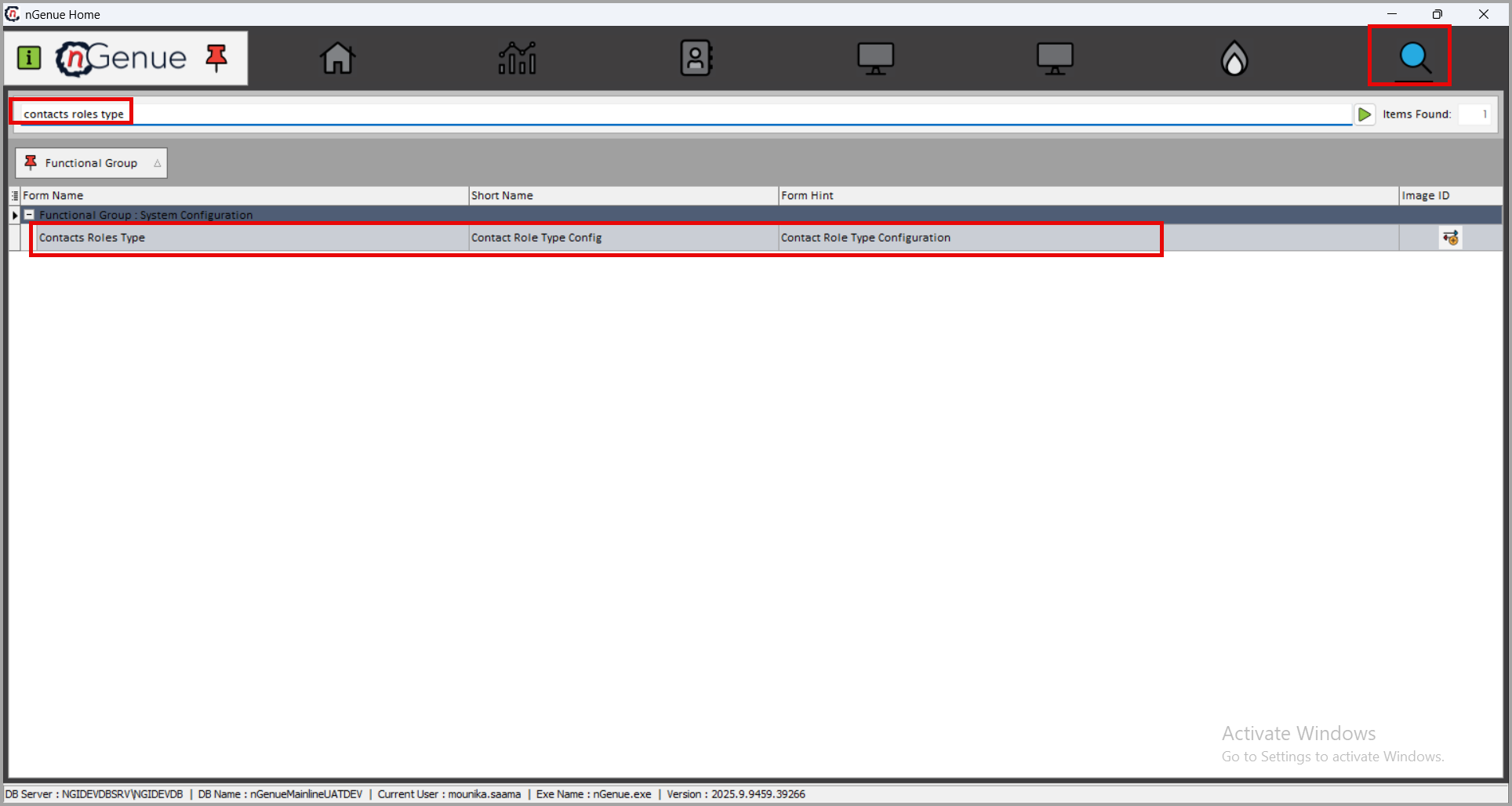
- Click the Search icon and enter contacts roles types in the search bar.
-
Double-click the Contacts roles types from the search results to open respective screen.
-
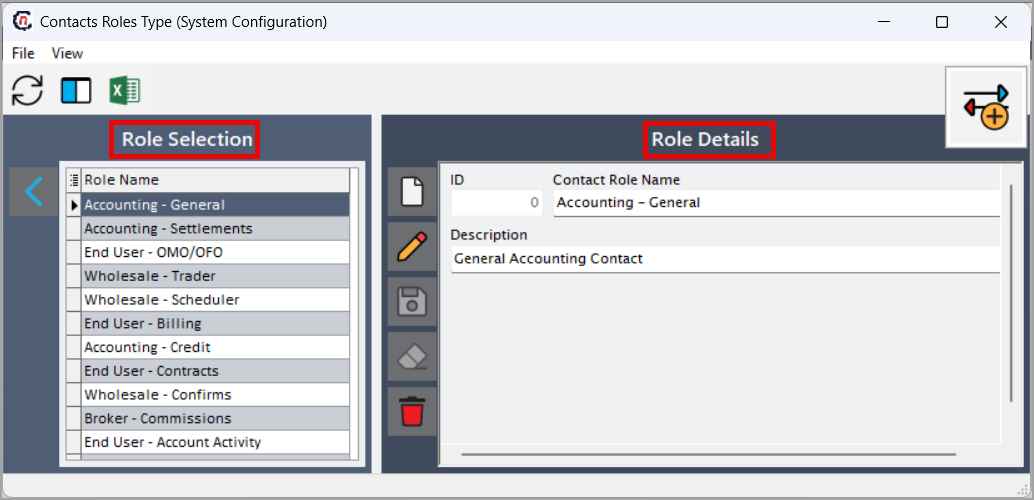
Contacts roles types screen has two sections:
- Roles selction: Displays list of exsiting contacts roles.
-
Roles Detail: Allows creation, editing, saving, and deletion of contact role type records.
Step 2: Create contacts roles types
-
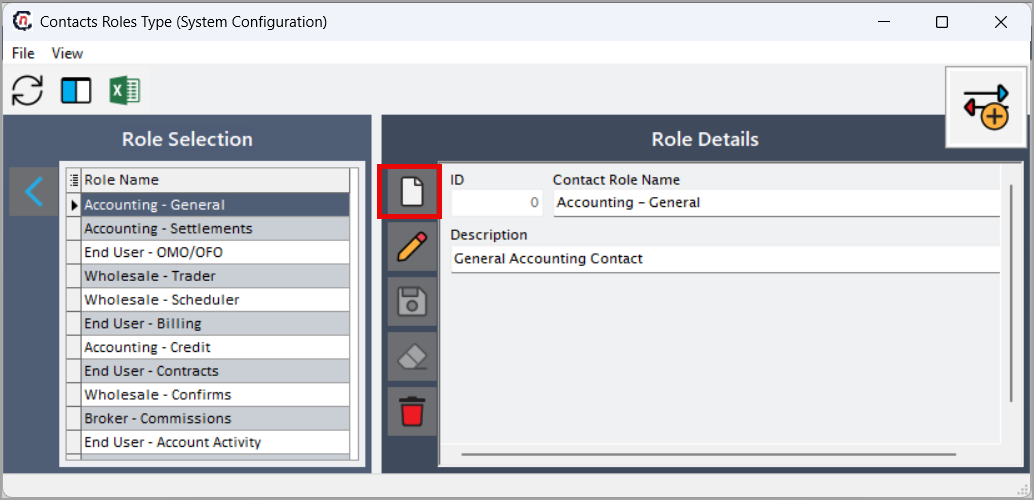
In the Roles Details section, click Add a Contacts roles types icon.
-
Enter the required details:
- ID: Auto-generated identifier.
- Contact role name: Enter the name of the contact role.
- Description: Provide a description of the role’s purpose or function.
-
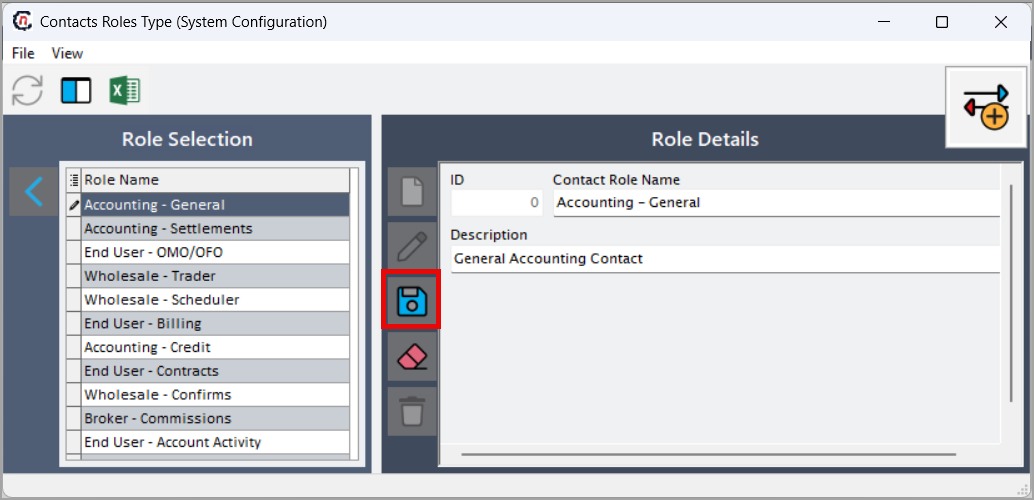
Click Save changes to current contact role type to store the new record.
Summary
The Contacts roles types feature in nGenue allows organizations to define standardized contact roles that can be assigned to individuals throughout the system. By setting up contact role types, businesses ensure consistent classification, improved communication workflows, and better management of contacts tied to accounts, operations, billing, and support functions.