Create a future deal
This guide shows how to add and manage a Future deal using a step-by-step scenario. Follow the instructions to complete the process efficiently.
Step 1: Navigate to the Deal Management section
- Log in to the nGenue application.
- Click the Search icon and enter deal management in the search bar.
- Select Deal management.
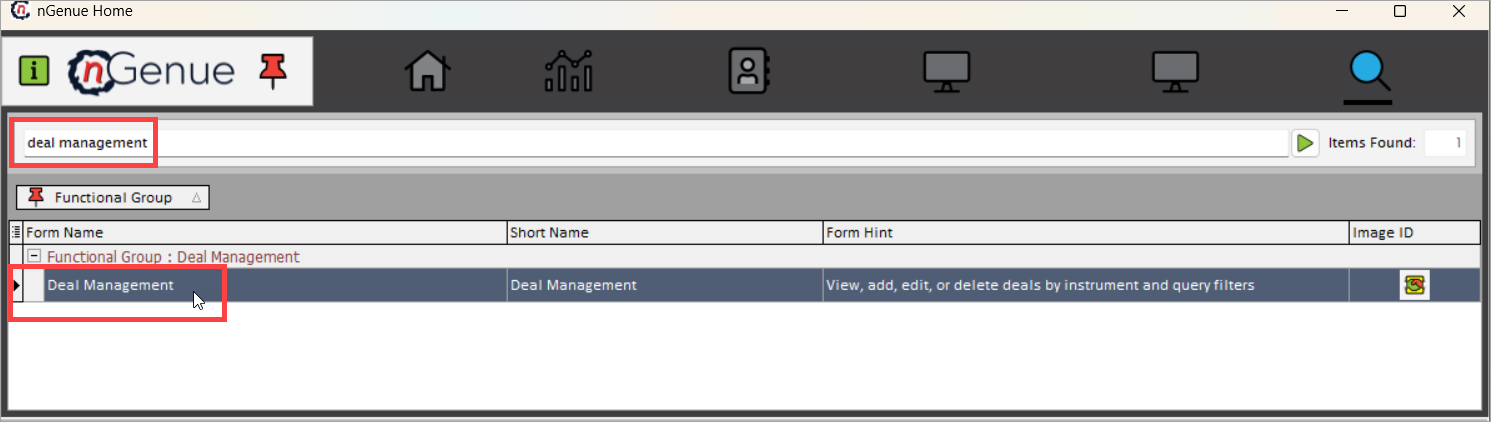
- The next screen is divided into two sections: Deal query and Deal details. For detailed information and a list of fields available in both sections, refer to the navigating deal management screen article.
Step 2: Create a new future deal
- Click on Add Future deal or use the (Alt+G) keyboard shortcut.
-
You'll be navigated to the Deal Capture screen, where you need to fill in the details as mentioned in the table below:
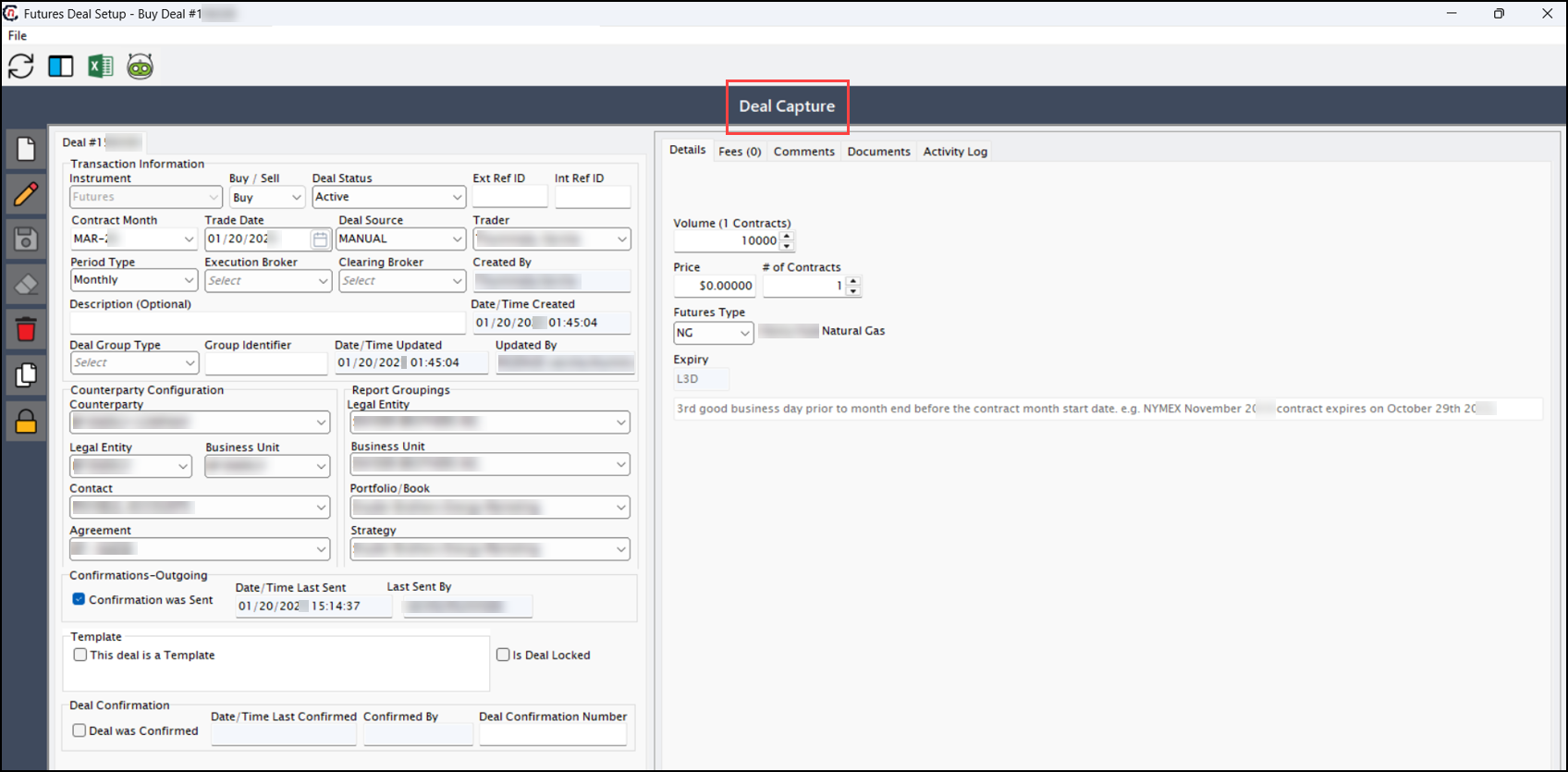
Transaction information fields
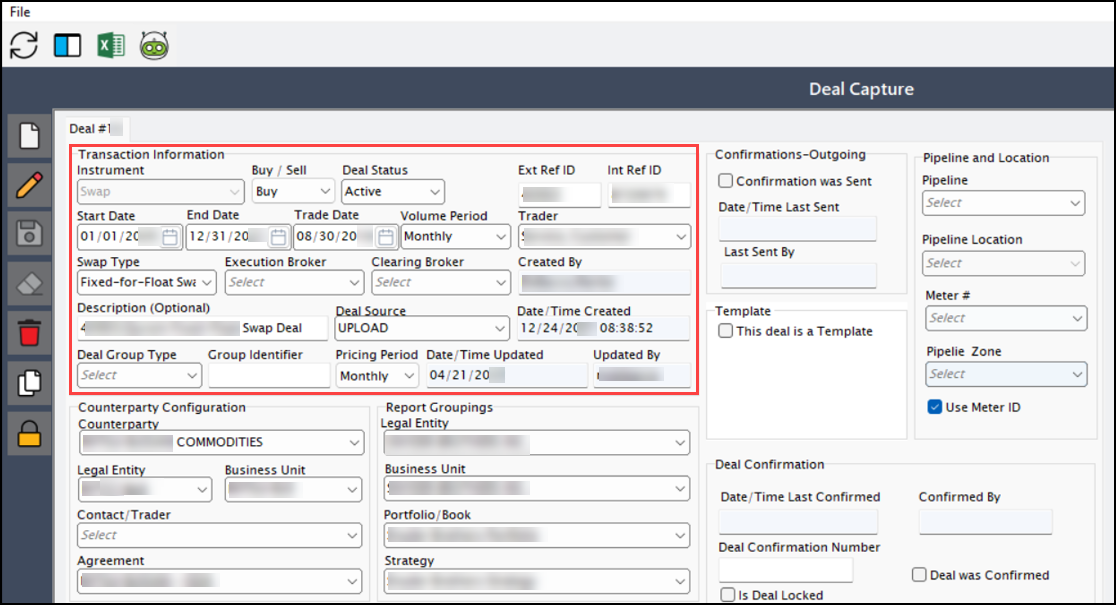
Fields Description Instrument Defines the type of deal being created. In this case, Future is selected as it involves the physical delivery of natural gas. Selecting the correct instrument ensures the deal is processed under the appropriate market rules and contract terms. Buy/sell Specifies whether the deal is a buy (purchase of gas) or a sell (sale of gas). This is crucial for financial accounting and tracking gas flow. It also determines whether the company is acquiring gas from a supplier or selling it to an end user. Deal Status Indicates the current lifecycle stage of the deal, such as Created, Confirmed, Partially Pathed, Canceled, Active, or Scheduled. Essential for workflow management and tracking deal progress. Ext Ref ID An external reference identifier used when deals are imported from third-party trading systems or market platforms. Helps in cross-referencing deals with external data sources. Int Ref ID An internal reference ID used within nGenue for tracking and linking deals across different modules. Helps in ensuring data consistency across deal management and financial reporting. Contract Month (to be added) Trade Date The date when the deal was executed. Important for historical tracking, regulatory reporting, and risk assessment. Trade dates impact financial reporting, as well as compliance with market regulations. Deal Source Specifies how the deal was created (e.g., manually entered, imported from an external system, or generated via an API). Helps in data validation and troubleshooting by tracking deal origins. Trader The person or entity responsible for executing the deal. Ensures accountability and allows for tracking individual traders’ activity for audit and risk management purposes. Period Type This defines the scheduling period for gas quantities and prices—daily, monthly, or seasonal—helping users align deliveries with operations and settlement cycles for accurate futures tracking. Execution Broker Identifies the intermediary or trader executing the contract, helping users track trades, manage counterparties, and maintain transparency in trading and settlement. Clearing Broker Identifies the intermediary clearing and settling the contract, ensuring trades are processed, margins managed, and obligations met for transparent, low-risk futures transactions. Created By The user who originally created the deal. Important for audit trails and compliance reporting, ensuring transparency in deal creation. Description A brief summary or identifier for the deal. Helps users quickly understand the nature, purpose, or special conditions of the deal. Typically includes relevant details like deal type, counterparty, or special pricing conditions. Date/Time Created The timestamp when the deal was initially created. Used for tracking deal history, financial reporting, and auditing purposes. Deal Group Type Defines the category under which the deal falls (e.g., wholesale, retail, physical, financial). Helps in grouping and filtering deals based on their nature and purpose. Group Identifier A unique grouping ID used to link related deals together. Helps in tracking multiple deals that are part of a larger transaction, such as parent-child deal structures. Date/Time Updated The timestamp of the last modification made to the deal. Useful for audit tracking and version control, ensuring transparency in deal modifications. Updated By The user who last modified the deal. Ensures accountability by tracking changes made by different users. Useful in audits and internal reviews. Counterparty Configuration fields
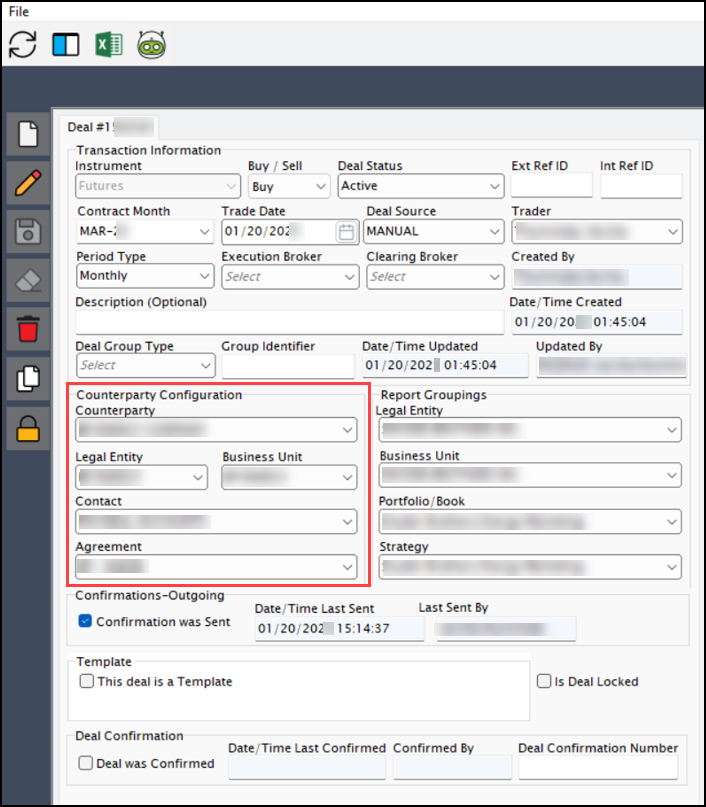
Fields Description Counterparty The entity (supplier or customer) with whom the deal is being made. This could be a wholesale supplier, marketer, or retail customer. Correct selection ensures accurate contract execution, billing, and risk management. Legal Entity The registered business entity of the counterparty. Some counterparties operate under multiple legal entities, so selecting the correct one ensures compliance with contracts and legal requirements. Business Unit The internal division of the company managing this deal. Different business units handle wholesale, retail, or trading operations. Proper selection ensures accounting and reporting accuracy. Contact The point of contact for the selected counterparty. This information is useful for communication regarding contract negotiations, scheduling, and issue resolution. Agreement The contract governing the deal. Specifies the terms and conditions, pricing structures, penalties, and obligations between the supplier and buyer. Ensures compliance and minimizes disputes. Report Groupings fields
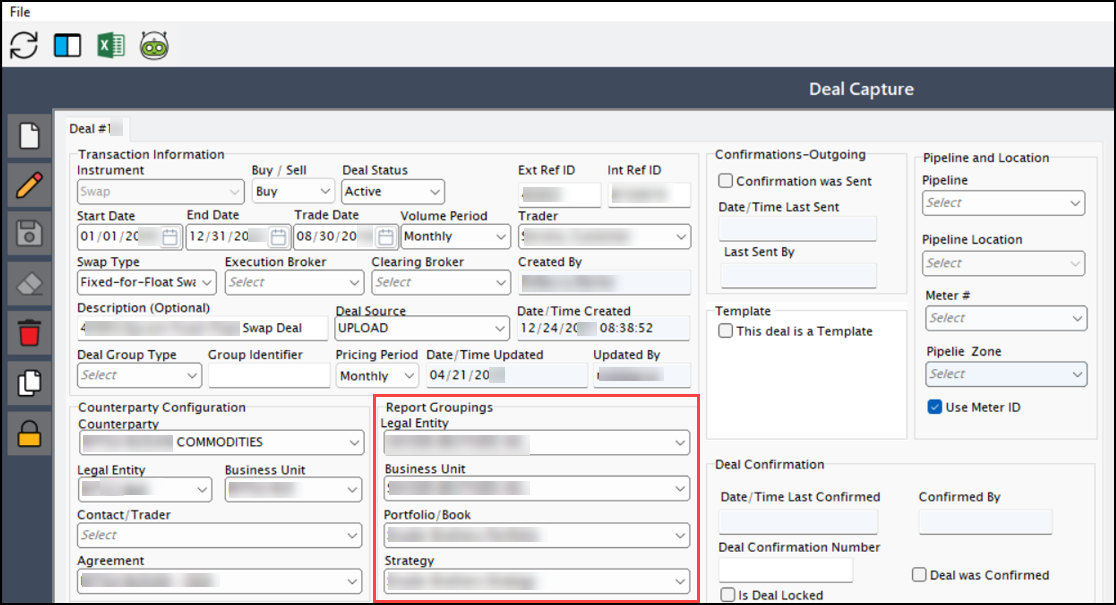
Fields Description Legal Entity The company division responsible for the deal. This helps in financial reporting, compliance, and taxation. Business Unit The internal business segment handling the transaction. Used for operational control and profit/loss allocation. Portfolio/Book The portfolio or trading book where the deal is recorded. This is important for risk management and financial analysis. Strategy Categorizes the deal based on the company's market strategy, such as hedging, speculative trading, or customer supply. Helps in risk assessment and profitability tracking. Confirmations-outgoing fields
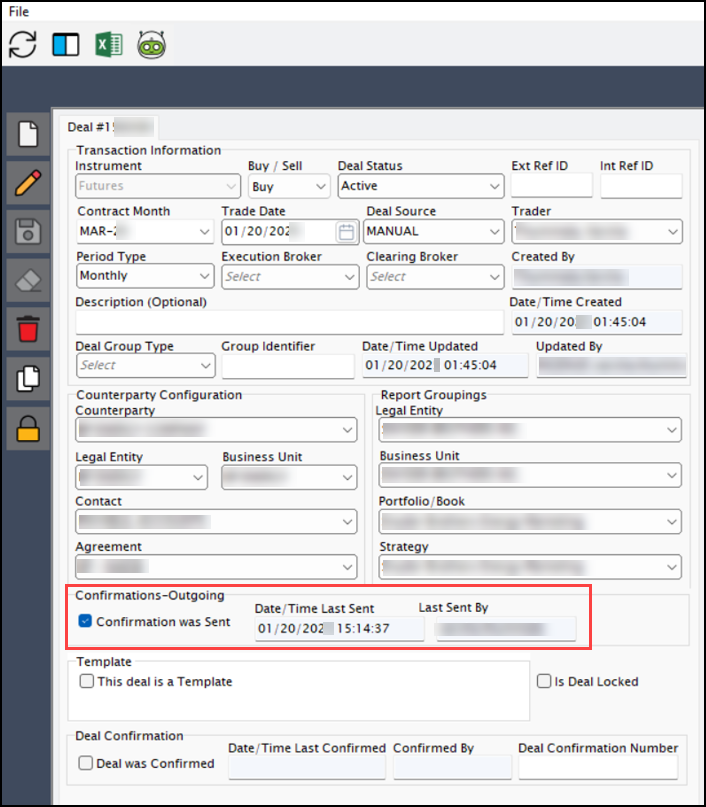
Fields Description Confirmation was sent If checked, it indicates that the deal confirmation was successfully sent to the counterparty. This helps in verifying transaction status. Date/Time Last Sent Displays the most recent date and time when the deal confirmation was sent. This helps track the communication status between counterparties. Last Sent By The username of the person who last sent the deal confirmation. This allows for accountability and tracking of confirmations. Template fields
Template Fields define pre-configured input parameters that streamline deal entry and ensure consistency across transactions.
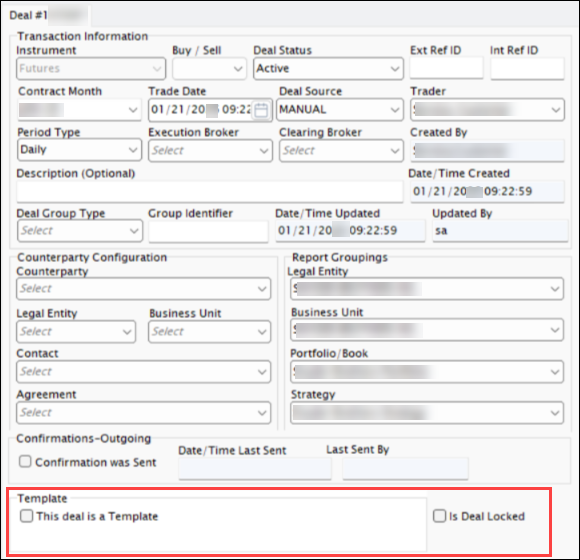
Fields Description This deal is a Template If the checkbox is checked, the deal is saved as a template, allowing users to quickly create similar deals in the future. This is useful for standardized contract structures that are frequently reused. Is Deal Locked This indicates whether a transaction is finalized and protected from further edits. Deal confirmation fields
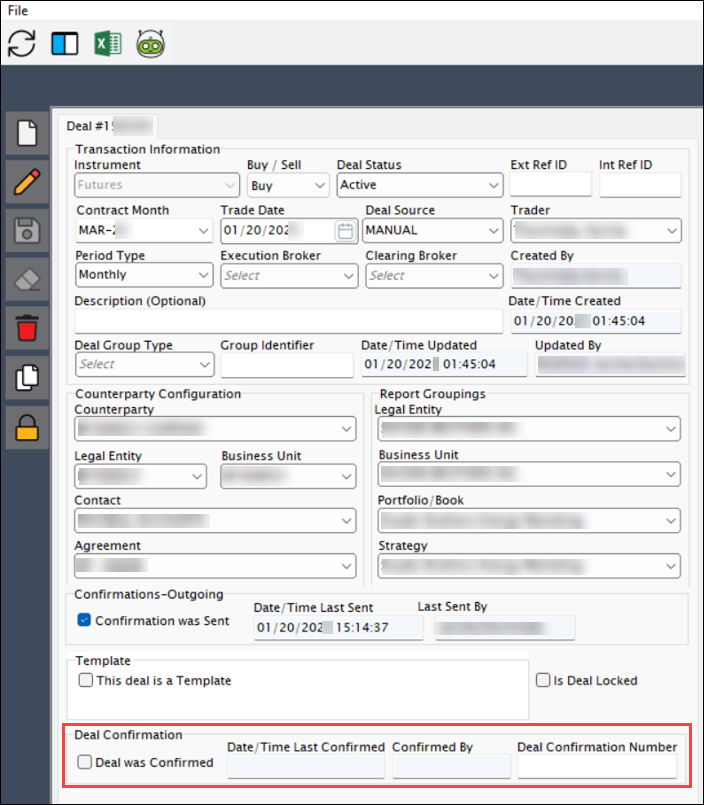
Fields Description Date/Time Last Confirmed Displays the most recent date and time when the deal was confirmed. This ensures that the transaction is officially recorded. Confirmed By The name of the user who confirmed the deal. This is important for tracking who approved and finalized the transaction. Deal Confirmation Number A unique identifier assigned to each confirmed deal. The number increases sequentially with each confirmation, making it easy to track past confirmations. Deal was Confirmed If checked, it indicates the deal is officially confirmed. This helps ensure that the deal is finalized and cannot be modified without further action. Is Deal Locked This indicates whether a transaction is finalized and protected from further edits.
Step 3: Saving the deal
Once all mandatory fields are filled, click on Save to finalize the deal. This ensures that all details are stored and processed correctly. You will navigate to the Details tab where a concise overview of the deal is displayed.
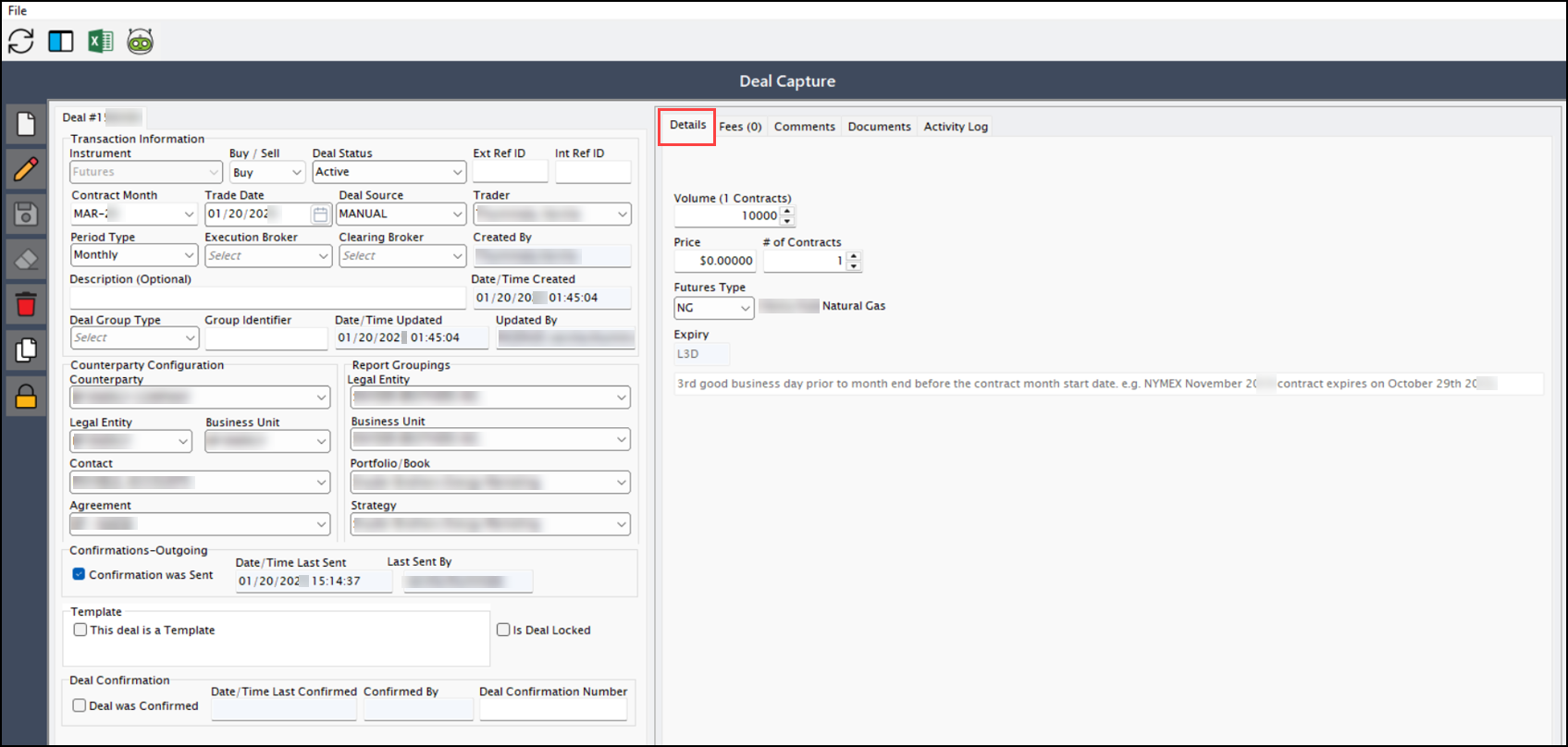
Additional tabs in the Future deal capture screen
The Future deal Capture screen provides multiple tabs, each serving a specific function to manage, review, and analyze a Future deal effectively. Below is a detailed explanation of each tab and its functionality.
1.1 Details tab
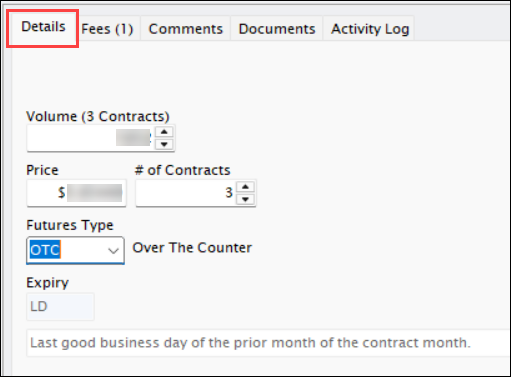
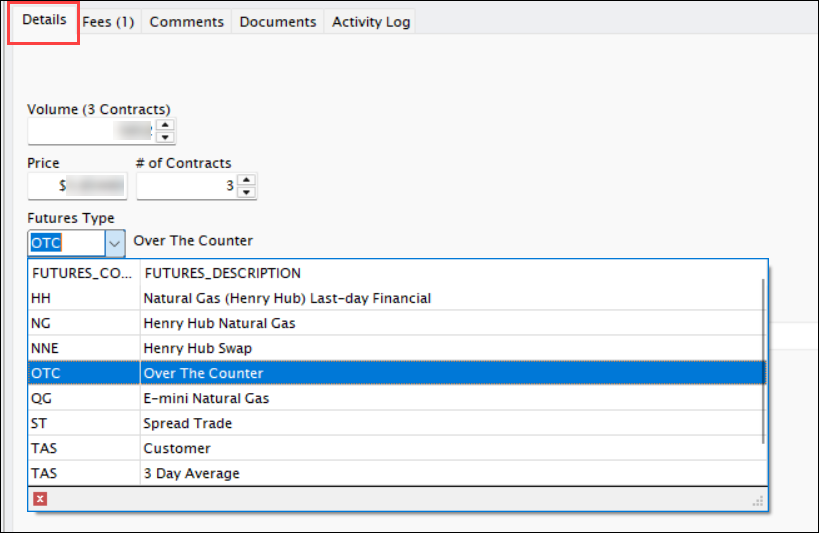
The Details tab provides a comprehensive view of all key information and attributes for a selected deal.
| Field | Description |
|---|---|
| Volume (1 Contracts) | Displays the quantity of gas covered by a single contract in the deal. |
| Price | The agreed rate per unit of gas for the contract. |
| # of Contracts | Shows the total gas contracts in the deal. |
| Futures Type | Specifies the category or structure of the futures contract, such as physical or financial, within the deal. |
| Expiry | The date the gas contract or futures agreement expires. |
1.2 Fees tab
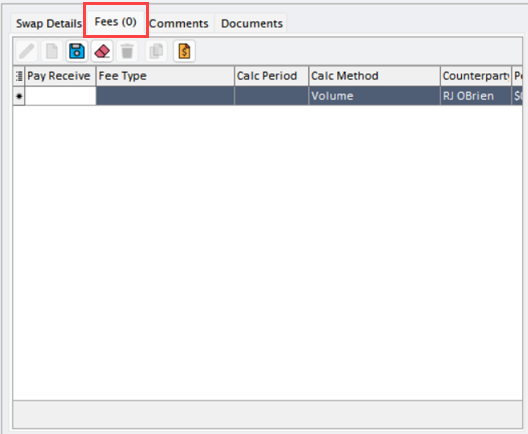
This tab allows users to add and manage deal-related fees.
| Field | Description |
|---|---|
| Pay/receive type | Indicates whether the fee is a pay or receive type. |
| Fee type | Includes broker fee, demand, sleeve, transfer, fuel loss, margin, nom mgmt, AMA opt, pipe fee, premium. |
| Calc period | Specifies the calculation period for the fee (daily, monthly, or one-time). |
| Calc method | Defines whether the fee is calculated based on volume or as a flat amount. |
| Counterparty | The entity (supplier or customer) with whom the deal is being made. This could be a wholesale supplier, marketer, or retail customer |
| Per unit price | Editable when volume-based calculation is selected; specifies price per unit volume. |
1.3 Comments tab
This tab allows users to add any additional remarks or important notes regarding the deal for reference and audit purposes.
1.4 Documents tab
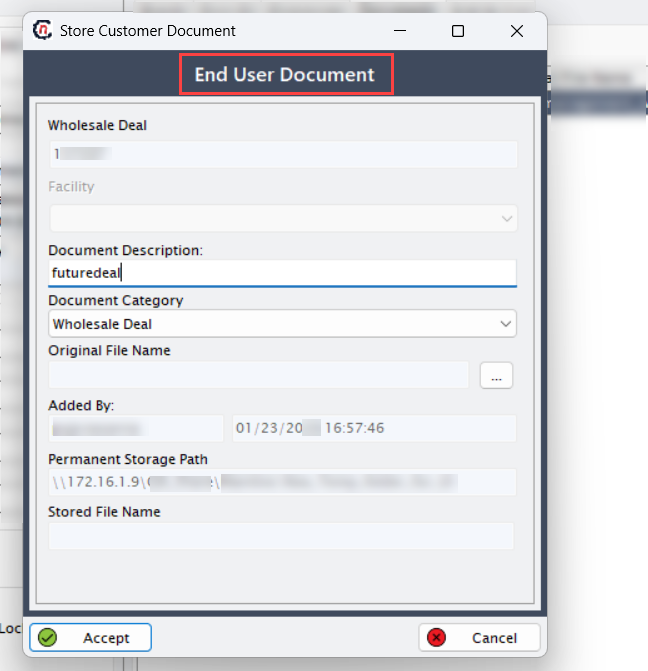
This tab allows users to attach documents related to the deal. Click add new end user document to navigate to the store customer document screen. Users can provide document description, document category, and original file name for record keeping.

2.3 Activity Log tab
The Deal activity log tab provides a complete audit trail of changes made to deals, including the user who made each change and the exact date and time it occurred.

| Field | Description |
|---|---|
| Date Range | Allows the user to specify start and end dates to filter activity logs. |
| Load Deal Activity Log | Clicking this button displays a complete log of all modifications, with descriptions of what changes were made, who made them, and when, for the specified date range. |
| Deal ID | Unique identifier for the deal. |
| Instrument | Type of financial asset or commodity. |
| Trader | User who executed the deal. |
| Initial Data | Original deal data before changes. |
| Data Changed To | Updated data after modification. |
| Changed By | User who made the change. |
| Timestamp | Date and time of the change. |
| Comments | Notes or reasons for the update. |
What's next
After the deal is created, the following post-deal activities are required to ensure proper execution, compliance, and tracking.
-
Pricing configuration
- Setting up a physical pricing for the deal:
- Set up pricing components for transportation or delivery services.
- Configure any applicable surcharges or adjustments based on market conditions.
- Setting up a physical pricing for the deal:
-
Nominations and scheduling
-
- Allocate volumes to the chosen pipeline paths or storage facilities as per the deal terms.
- Ensure nominations comply with pipeline rules and available capacity.
-
- Coordinate with counterparties and pipeline operators to set up the delivery timelines.
- Update and track the schedules within nGenue for real-time monitoring.
-
By following this procedure, deals are created, executed, and monitored efficiently in nGenue, with proper post-deal activities ensuring smooth operations and compliance.